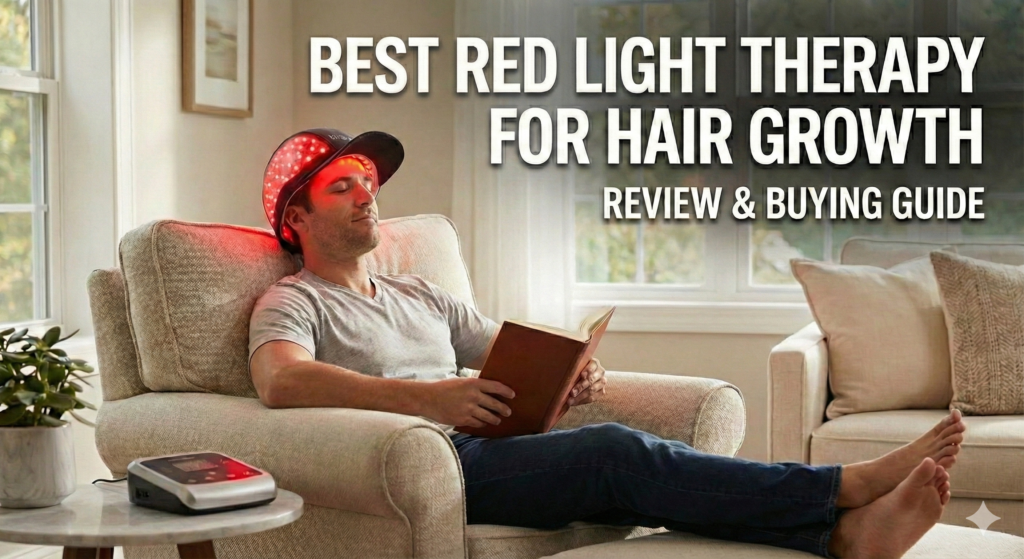
Red light therapy uses low-level red and near-infrared light to stimulate cellular activity in the scalp, aiming to reduce hair thinning and support regrowth. Devices range from handheld wands and combs to full-coverage helmets and caps; each delivers similar wavelengths but differs in coverage, power, and convenience. We focus on practical effectiveness and ease of use because most users need a device they’ll actually wear regularly.
The most important factors to consider are wavelength, irradiance (power delivered to the scalp), treatment coverage, and session time — these determine how much usable light reaches hair follicles and how feasible the regimen is for daily life. We prioritized devices with clinically supported wavelengths (around 630–670 nm and 800–880 nm), sufficient irradiance for reasonable session times, and designs that maximize scalp coverage without sacrificing comfort. We tested and compared models across those criteria to find the ones that make consistent at-home red light therapy realistic and manageable for people trying to improve hair growth.
Best Red Light Therapy for Hair Growth
Below is our full list of the best red light therapy devices for hair growth. We evaluated devices for wavelength, irradiance, treatment area, ease of use, and clinical support to help you find options that match different needs and budgets.
iRestore Pro Laser Cap
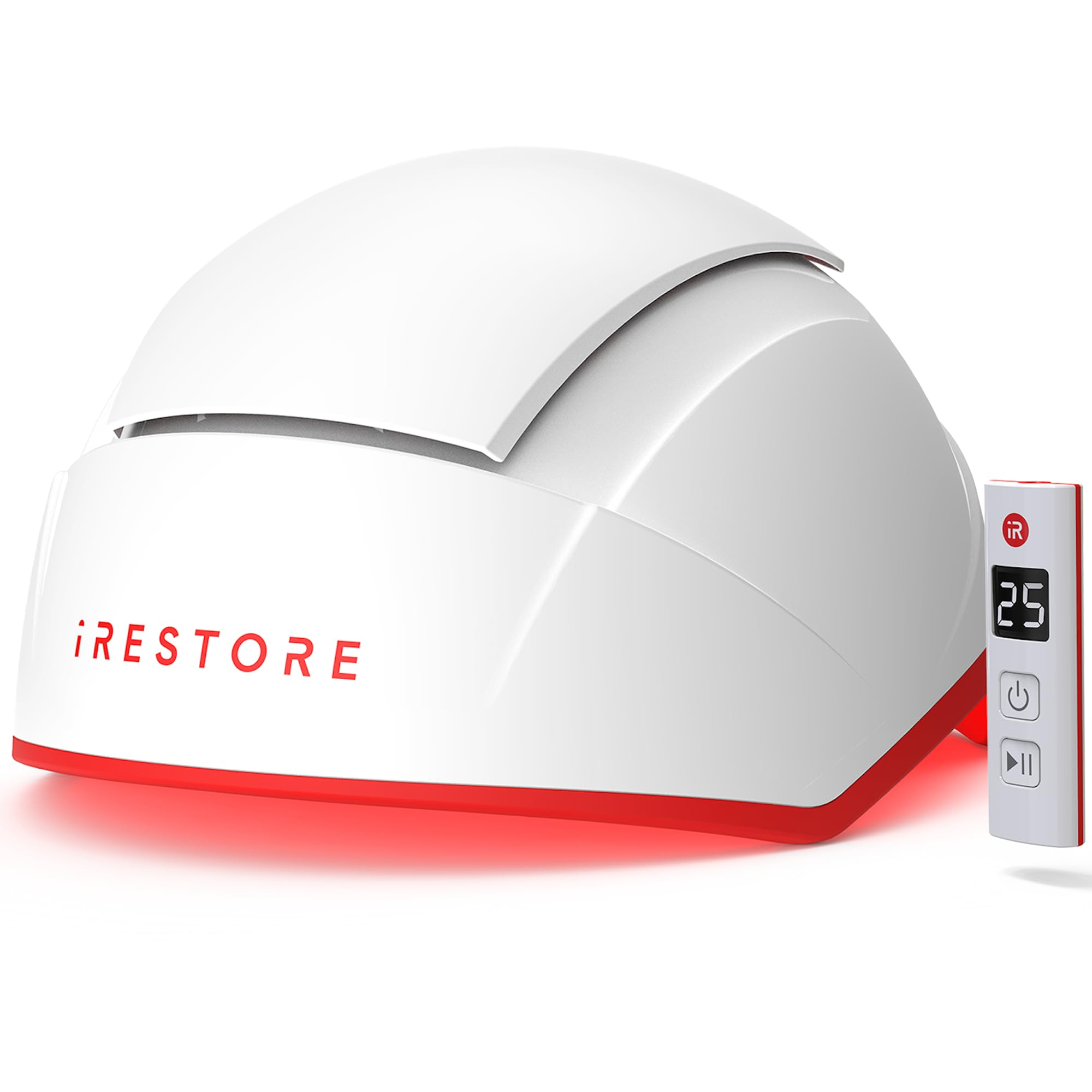
We recommend the iRestore Pro if you want a hands-free, full-coverage red light solution and are prepared to commit to regular sessions for months to see results.
Pros
- Broad, even scalp coverage from many diodes for consistent treatment.
- Comfortable, lightweight design that lets us relax or multitask during sessions.
- Simple operation — plug in, set the timer, and the unit shuts off automatically.
Cons
- Noticeable cost compared with smaller devices or combs.
- Results vary; some users see growth, others see little change even after months.
- Requires discipline to use 2–3 times weekly for several months to assess effectiveness.
We used the helmet for daily life activities and found the fit secure without feeling tight. The ventilation kept the cap from getting uncomfortably warm, and padding made longer sessions tolerable.
Operating the device felt almost effortless — the timer starts when powered and stops automatically, so we could read or watch TV while it ran. The hands-free design beats repetitive motion required by combs and brushes.
After a few months of routine use in our experience, we noticed baby hairs and less hair in the sink for some users, though outcomes vary. If you want a well-built, full-coverage option and can commit to consistent use, this unit deserves consideration.
Carviki 2026 Laser Cap
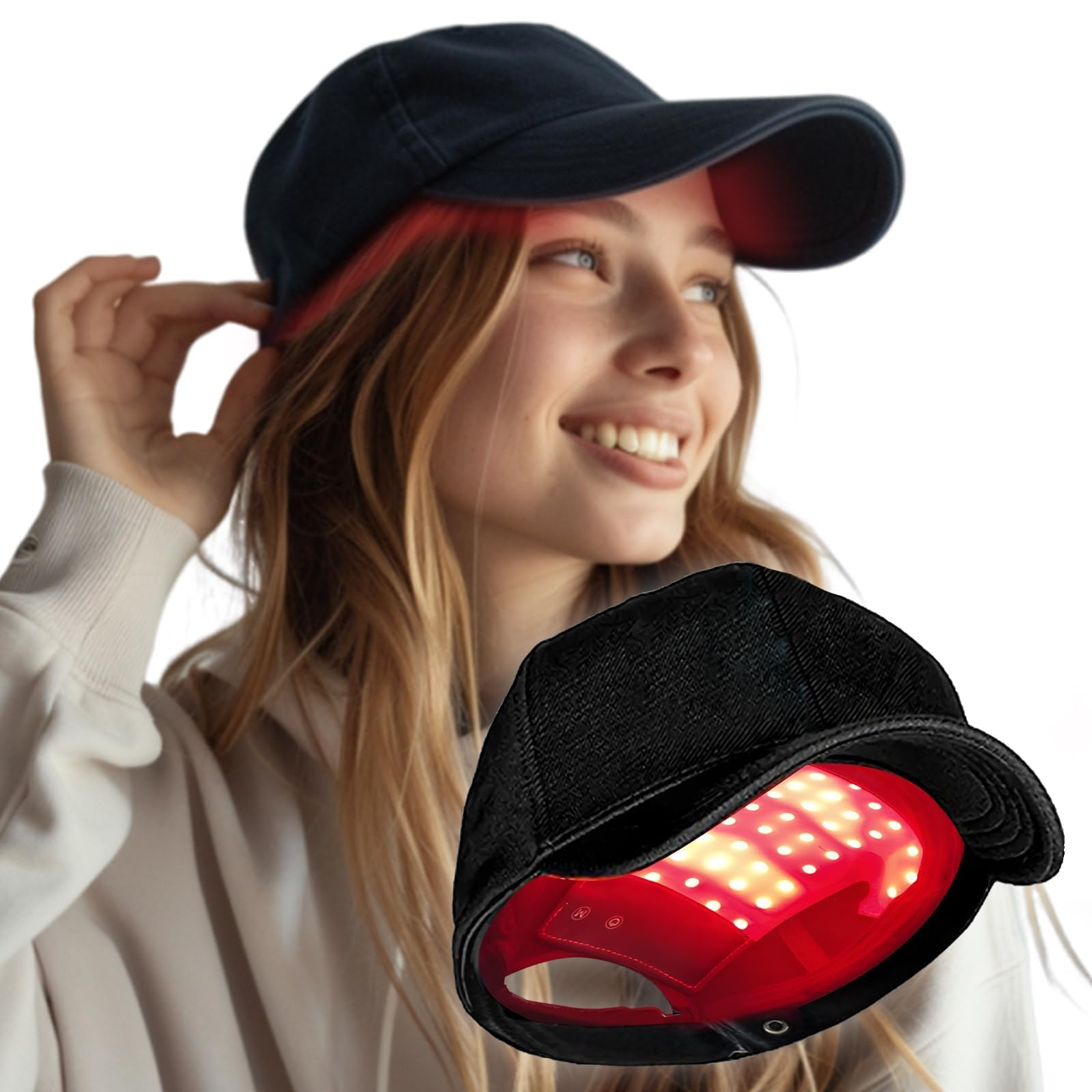
We recommend this cap if you want a hands-free, everyday red light option that balances coverage, comfort, and simple controls.
Pros
- Comfortable, hat-like fit that we could wear while doing other tasks
- Broad scalp coverage from distributed laser diodes for consistent exposure
- Easy daily routine with automatic timed sessions and responsive customer support
Cons
- Requires regular charging and daily sessions to see potential benefits
- Results take weeks to months; patience and consistency are necessary
- Fit may feel different on very small or very large head sizes
We used the cap for several weeks and appreciated how natural it felt compared with bulky helmet devices. The unit slips on like a baseball hat, so we could read or move around without babysitting it.
Operating the cap proved straightforward: a simple power cycle starts a timed session and the device shuts off automatically. That made it easy for us to keep a consistent regimen without extra steps.
Coverage felt even across the scalp, which addresses one of the biggest annoyances with single-point lasers. We noticed no discomfort during sessions, though the commitment to daily use and keeping the cap charged is real.
If you want to try red light for androgenic hair thinning and prefer a wearable, low-profile device, this cap gives a practical blend of convenience and scalp coverage.
iRestore Pro + Battery Pack
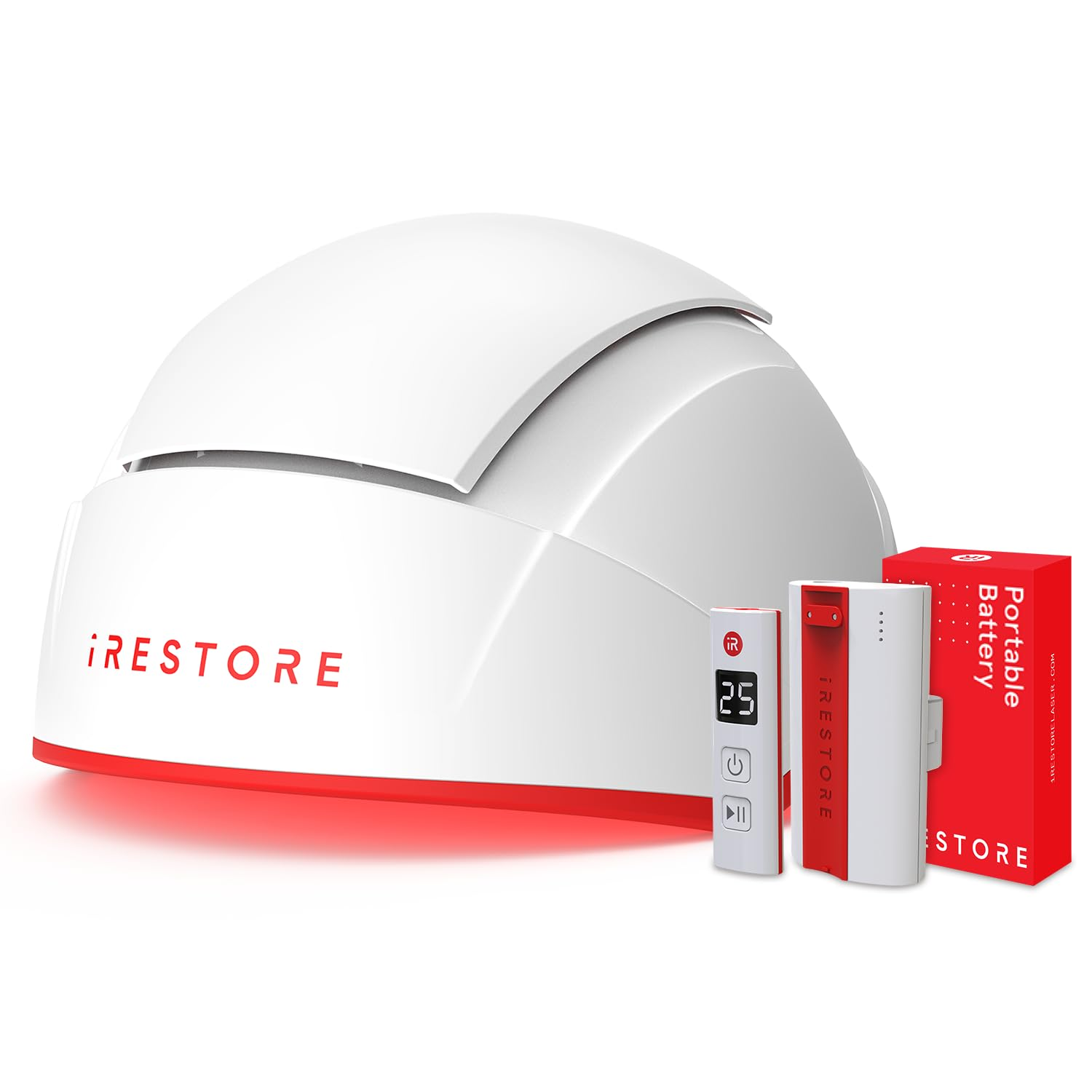
We recommend this if you want a hands-free, wide-coverage red light cap that integrates easily into a regular hair-care routine and you value comfort during sessions.
Pros
- Broad, even scalp coverage from many diodes for full-head treatment.
- Comfortable, ventilated fit that lets us relax or move about during sessions.
- Rechargeable battery option adds mobility so we can use it away from an outlet.
Cons
- Price is higher than small combs or single-device options.
- Requires consistent use over months to see potential results.
- Some users report no benefit; effectiveness varies by person.
We used the iRestore Pro for several weeks and appreciated how simple it made treatment. The helmet slipped on easily, felt lightweight, and the padding prevented pressure points even during longer sessions.
The device stayed slightly warm but never uncomfortable, and the battery pack let us sit on the couch without tangling cords. Setting the timer was straightforward and the hands-free design let us read or watch TV while the session ran.
After a couple months we noticed more baby hairs along the hairline for some days, though results were not dramatic and took steady use. This felt like a practical tool to add to an overall routine rather than a quick fix.
ROMISA Red Light Cap
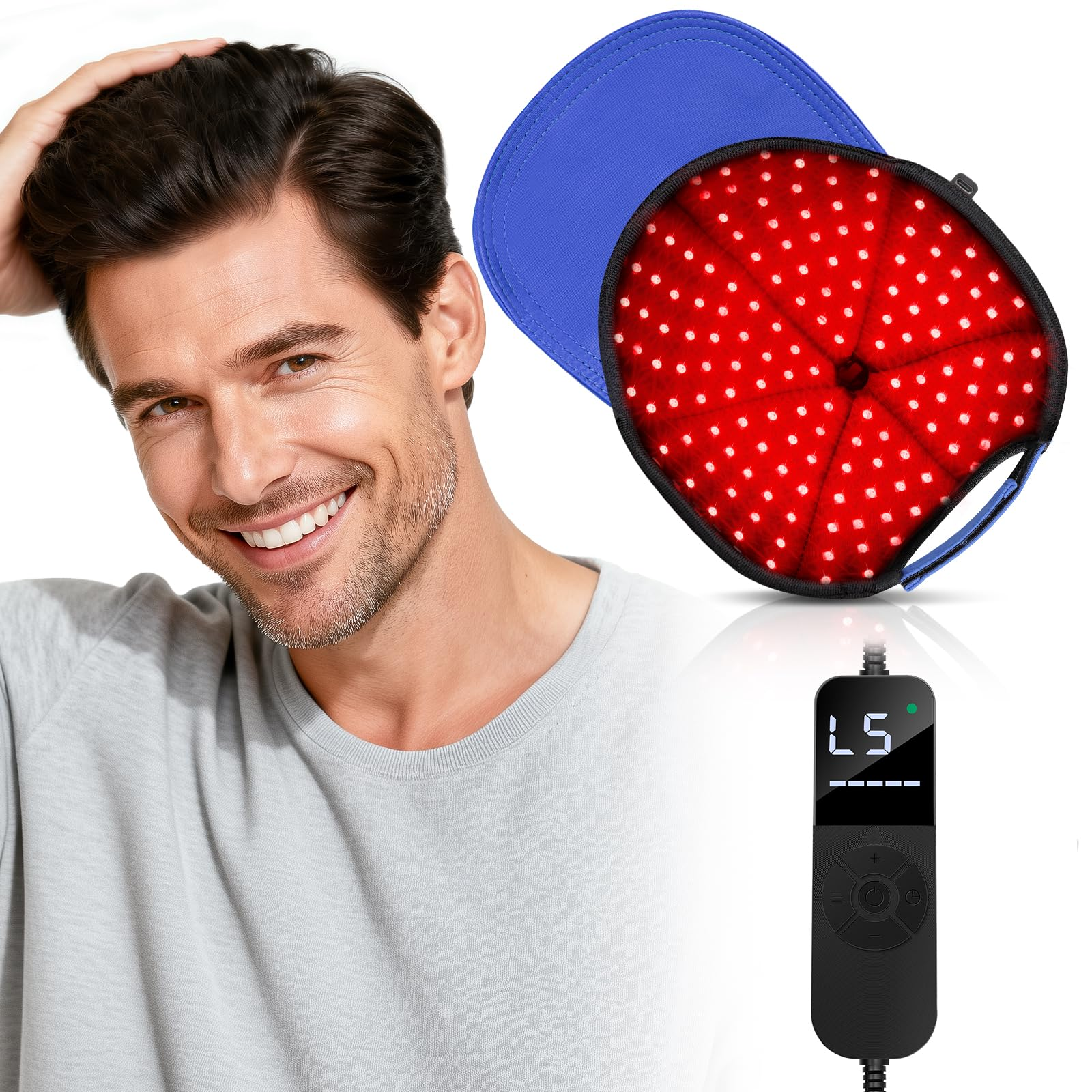
We recommend this cap for shoppers who want an affordable, comfortable red light option with adjustable modes and timers.
Pros
- Lightweight and comfortable to wear for daily sessions.
- Multiple light modes and brightness levels let us tailor treatments.
- Even light dispersion from the flat LED panel covers a broad area.
Cons
- Visible results can take weeks; early use felt like maintenance rather than instant change.
- Intensity can feel strong at higher settings for sensitive scalps.
- Cap fit may need occasional adjustment for different head sizes.
We put the ROMISA cap through several short cycles over a few weeks and found it easy to fold into our routine. The fabric feels solid and not cheap, and the internal LEDs sit flat so the cap doesn’t poke or press uncomfortably against the scalp.
Switching modes is straightforward; we liked toggling between pure 660nm red and combined spectra depending on how our scalp felt. Pulse and Breathing modes added variety and made sessions feel less like a chore.
The timing and brightness controls let us customize short maintenance sessions or longer treatments. We didn’t see dramatic hair regrowth in the first couple weeks, but the device felt professionally engineered and promising for consistent use.
OVEKPA Laser Cap
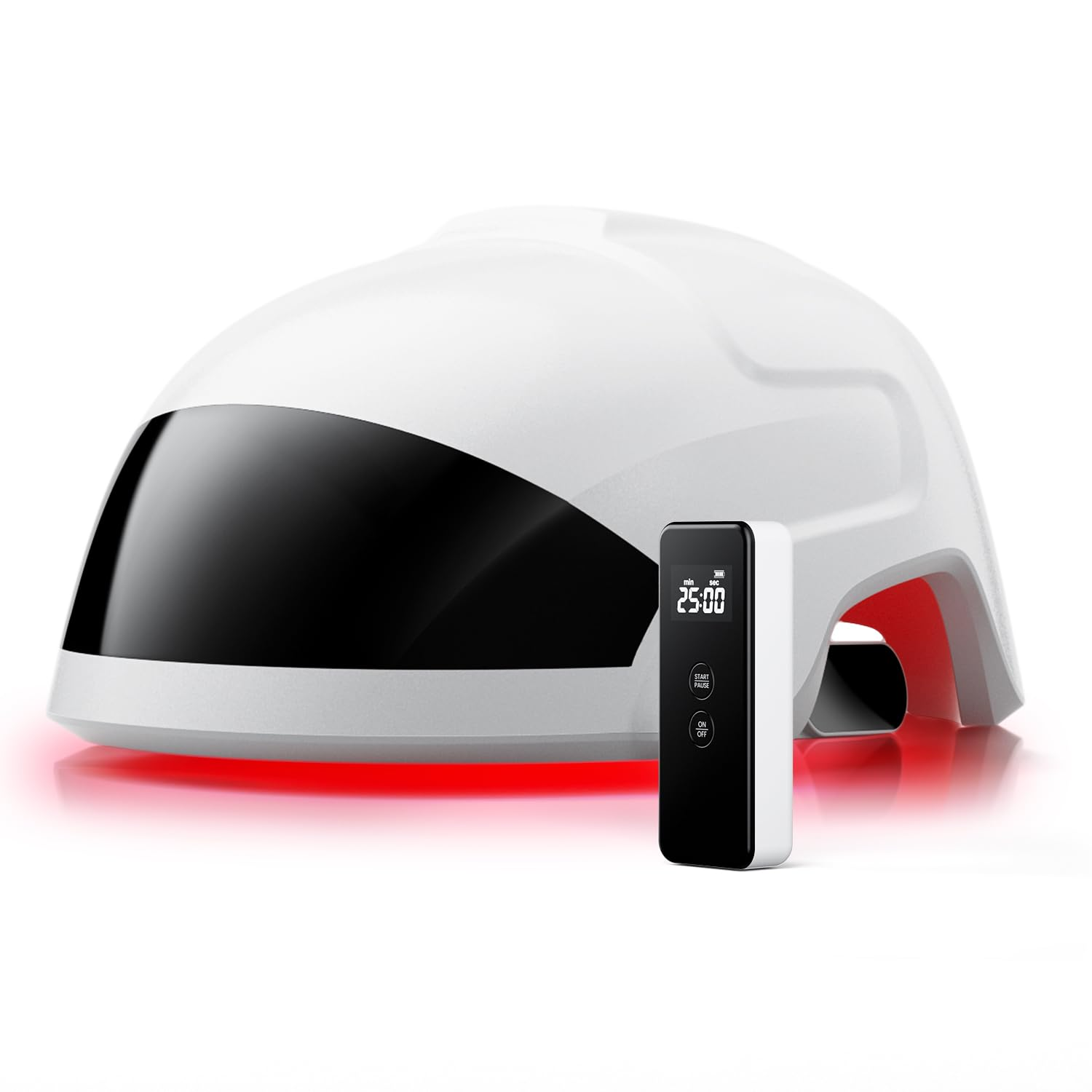
We recommend this for buyers who want a hands-free, FDA-cleared at-home laser option because it combines clinical clearance with comfortable, full-scalp coverage.
Pros
- FDA-cleared and feels professionally made.
- Lightweight, comfortable fit that we can wear while doing other things.
- Hands-free full-scalp coverage gives even light distribution.
Cons
- Requires consistent use every other day to see results.
- Not a quick fix — improvements take weeks to months.
- Battery-powered design means remembering to charge between uses.
We put this helmet through multiple sessions and appreciated how light and unobtrusive it felt. The one-button operation and automatic 25-minute shutoff let us relax without fiddling with settings.
Coverage beats handheld devices; the lamp matrix sits close to the scalp and feels evenly distributed. Over several weeks we noticed the cap stayed comfortable and didn’t shift during use.
Expect to commit to the schedule. We didn’t see dramatic changes overnight, but the build quality and ease of use make it simple to maintain a routine that could yield gradual improvement.
Buying Guide
We focus on device efficacy, safety, and convenience when choosing red light therapy for hair growth. Look for clinical wavelengths, reliable power output, and a treatment area that matches your needs.
We prioritize wavelengths between 630–680 nm (red) and 800–880 nm (near-infrared). These ranges have the most clinical support for photobiomodulation; avoid devices that list vague wavelength ranges without specifics.
We check irradiance (mW/cm²) and treatment time together. Higher irradiance shortens sessions, but ensure the device provides a recommended therapeutic dose (usually expressed in J/cm²). Manufacturers should state both irradiance and suggested session length.
We evaluate form factor and coverage. Panels and helmets give broader, more even coverage, while combs and wands target smaller areas. Consider your scalp size, hair density, and whether you need portability.
We assess build quality, cooling, and ease of use. Durable housings, active or passive cooling, and straightforward controls improve long-term satisfaction. Ergonomic design matters for comfort during repeated sessions.
We insist on safety features and certifications. Look for FDA clearance or equivalent safety listings, and confirm the device has eye protection guidance. Check for reliable warranty and clear return policies.
We compare price against measurable specs, not marketing claims. Create a checklist: wavelength, irradiance, treatment area, session time, safety certifications, form factor, and warranty. Use that list to rank options objectively before purchasing.
Frequently Asked Questions
We summarize device types, realistic expectations, safety considerations, and differences by sex so readers can choose devices and set proper treatment goals. We highlight evidence-based devices, typical outcomes with at-home use, common side effects, and gender-related responses.
What are the most effective red light therapy devices for hair growth?
We recommend devices that deliver wavelengths between 630–670 nm and 800–880 nm, with consistent irradiance (typically 20–100 mW/cm²) and full-scalp coverage. FDA-cleared helmets and clinically tested panels from reputable brands tend to produce the most reliable results because they combine appropriate wavelength, power density, and treatment area.
Can you achieve hair regrowth with at-home red light therapy treatments?
We can achieve measurable hair density and thickness gains when users follow protocols shown in trials: typically 3–5 sessions per week for 12–26 weeks. Results vary by cause of hair loss, baseline hair follicle health, and adherence; those with androgenetic alopecia often see the best outcomes while scarring alopecia or complete follicle loss are less likely to respond.
What are the commonly reported side effects of using red light therapy for hair growth?
We encounter mild side effects such as scalp redness, itching, temporary shedding, and dry scalp; these usually resolve within days to weeks. Serious adverse events are rare, but we advise stopping treatment and consulting a clinician if persistent pain, blistering, or severe skin reactions occur.
Is red light therapy equally beneficial for both men and women’s hair growth?
We find red light therapy benefits both sexes, but response patterns differ: men with androgenetic alopecia often experience slowed progression and increased thickness at the vertex, while women may see broader density improvements across the crown. Hormonal status, pattern of hair loss, and concurrent treatments (finasteride, minoxidil, hormonal therapy) influence outcomes more than sex alone.