
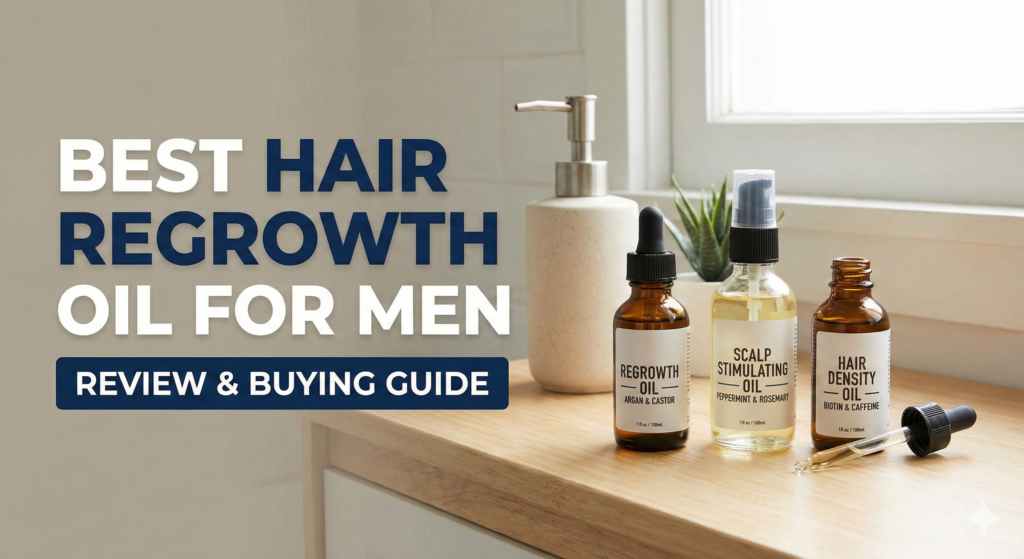
Hair loss affects many men at different stages of life, and topical regrowth oils offer a targeted, easy-to-apply approach to supporting thicker-looking hair and healthier scalp skin. These products typically combine active ingredients such as minoxidil or plant-derived compounds with carrier oils, vitamins, and botanicals to stimulate follicles, reduce breakage, and improve scalp condition.
When choosing a hair regrowth oil, consider the active ingredient profile, concentration, evidence of efficacy, scalp compatibility (oily, dry, or sensitive), and ease of application; scent, residue, and compatibility with other treatments also matter. The most important thing is to match the oil’s active ingredients and formulation to your hair-loss pattern and scalp sensitivity, since effectiveness and tolerability vary widely. We tested and compared several popular regrowth oils to identify options that combine proven ingredients, tolerable formulas, and straightforward daily use to help you choose the right one.
Best Hair Regrowth Oils for Men
Below is our full list of the best hair regrowth oils for men. We selected options based on active ingredients, user results, application ease, and safety. Our goal is to help you find an effective oil that fits your routine and scalp needs.
Mielle Rosemary & Mint Oil
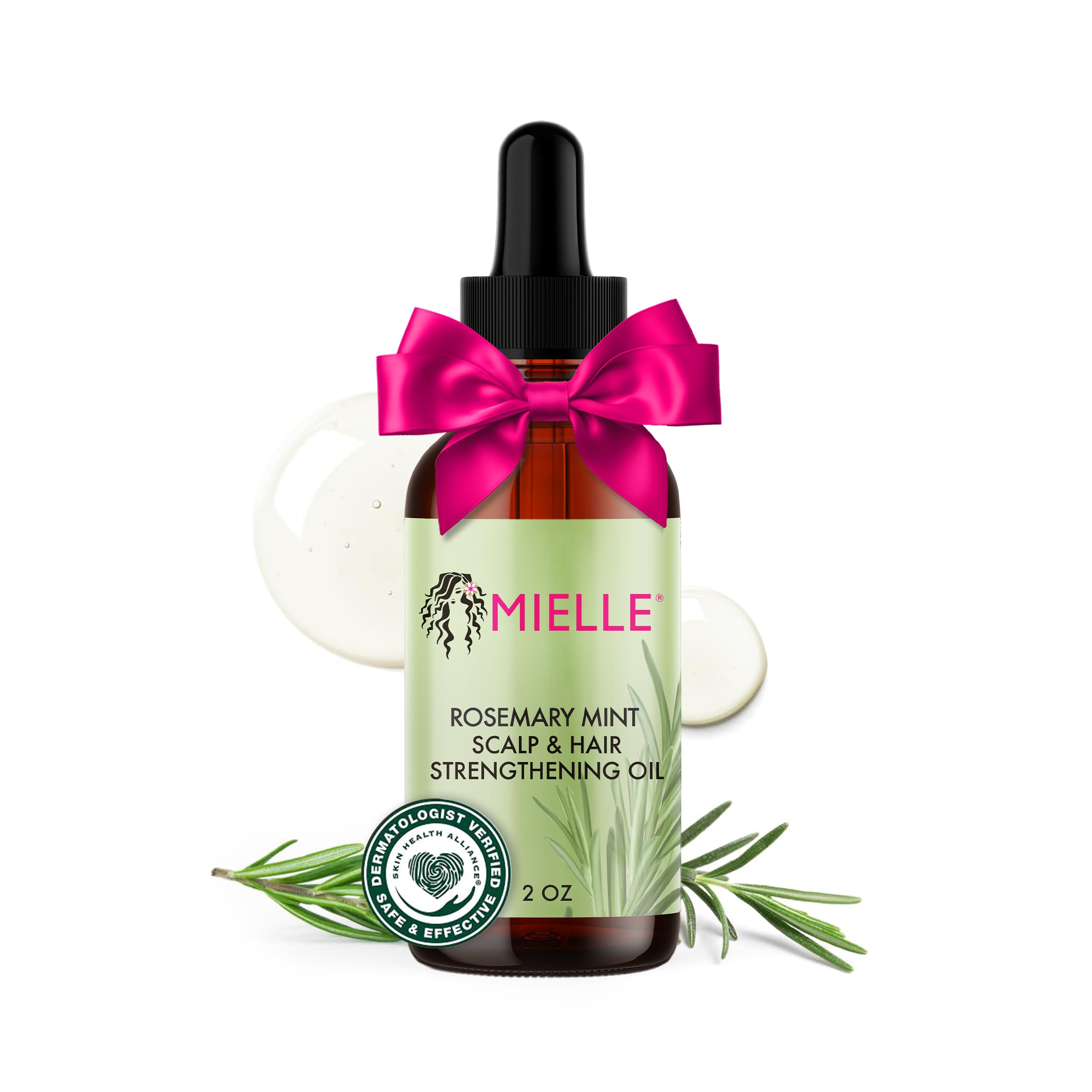
We recommend this if you want a lightweight, biotin-infused oil that soothes dry scalps and feels nourishing without heavy residue.
Pros
- Light, non-greasy texture that absorbs quickly.
- Noticeably calms itch and dryness after a few uses.
- Versatile: scalp massage, pre-wash, or end treatment.
Cons
- Small 2 oz bottle runs out faster than expected.
- Rosemary-mint scent can be strong for scent-sensitive users.
- Results on regrowth vary and take consistent use.
We used this oil as a nightly scalp treatment and appreciated how it sank in without leaving hair stiff or oily. The mint delivers a cool tingle that made scalp massages feel effective, and the blend of castor, jojoba, and coconut oils left strand tips softer after a few applications.
After three weeks we saw reduced flaking and less scalp irritation; thickness improvement felt subtle and gradual rather than dramatic. The bottle size forced us to reapply sparingly, which affected how quickly we could test longer-term growth claims.
Application is straightforward: warm a few drops between fingertips, focus on problem areas, then massage for circulation. We liked using it before washing for deeper conditioning and on ends to tame frizz, though the aroma may bother light-sensitive noses.
Buy link: Mielle Rosemary & Mint Oil
Botanic Hearth Rosemary Hair Oil
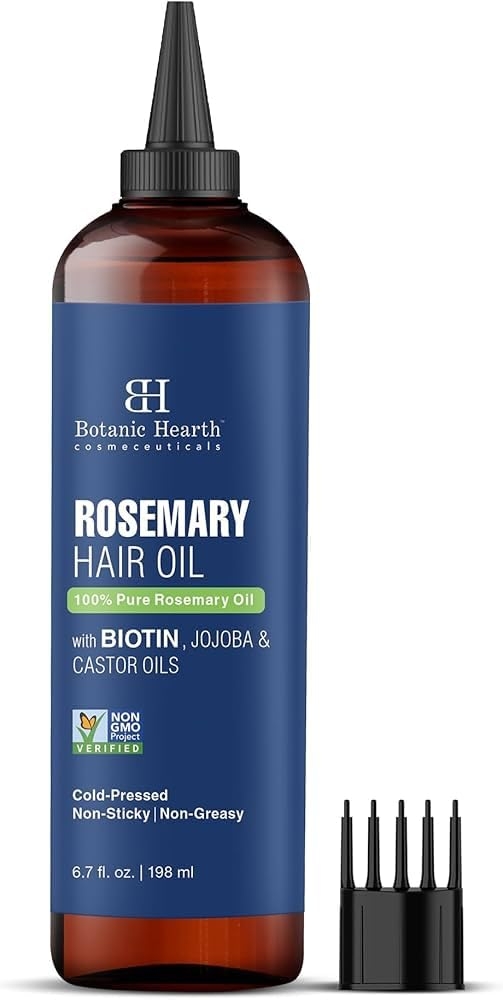
We recommend this oil if you want a natural-feeling, easy-to-apply scalp treatment that can improve scalp hydration and may support thicker-looking hair over time.
Pros
- Smells pleasant for rosemary and doesn’t overpower the room.
- Feels nourishing without leaving hair greasy when used sparingly.
- Handy applicator heads make targeted scalp dosing simple.
Cons
- Results on regrowth are gradual and individual; expect weeks to months.
- Strong rosemary scent may still bother some users.
- Needs consistent use plus scalp massage for best effects.
We used this oil as a weekly pre-wash treatment and also tried short nightly applications. The bottle dispenses cleanly, and the comb-like tip helped place oil directly on thinning areas without wasting product.
The texture sits between light and medium — it spreads easily and absorbs into the scalp with a gentle massage. After a few weeks our scalp felt less dry and flaky, and hair looked slightly fuller where we applied it regularly.
Ingredients like rosemary, biotin, castor, and jojoba feel thoughtfully combined; the blend delivers hydration and a tightening, refreshed scalp sensation. Don’t expect overnight miracles: thicker regrowth, when it happens, came after consistent use and complementary care like proper nutrition and scalp stimulation.
If you want to try it, buy it here: Botanic Hearth Rosemary Hair Oil.
Wild Growth Hair Oil (4 oz)
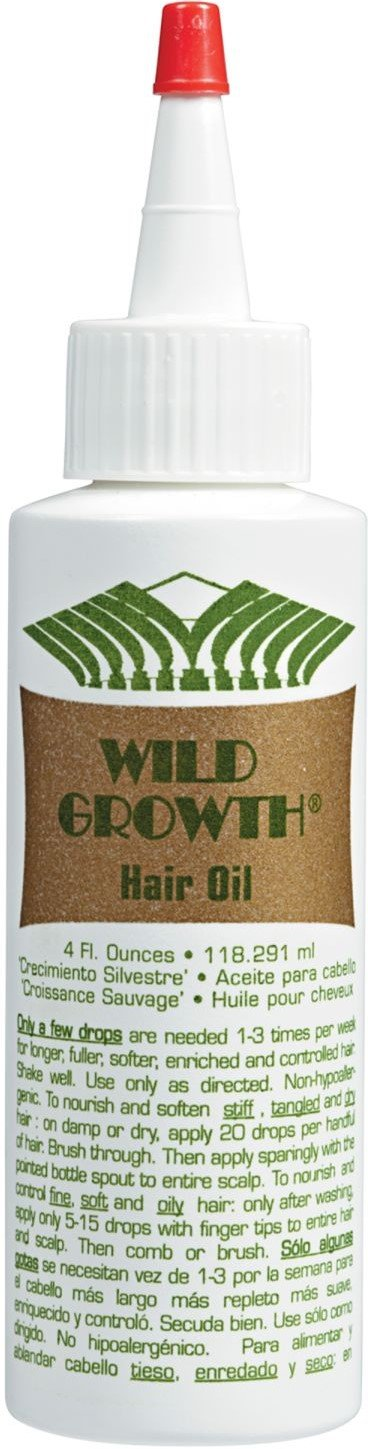
We recommend this if you want a plant-rich oil that softens hair and can help reduce breakage while encouraging thicker-looking growth.
Pros
- Deeply conditions and detangles with a little product.
- Noticeably softens dry, brittle strands after a few uses.
- Concentrated formula stretches applications and lasts.
Cons
- Strong herbal scent that some men may find medicinal.
- Oily texture can look greasy if overapplied.
- Requires consistent use over weeks to see growth effects.
We used Wild Growth as a daily scalp and strand treatment for several weeks and found it excels at hydration. A few drops warmed between our palms smooth frizz and make combing easier, especially through coarse sections.
The scent hits immediately — eucalyptus and peppermint come through — and it lingers on the pillow if you apply heavily at night. We learned to use sparingly at roots to avoid a greasy sheen while still getting benefits for the ends.
After consistent application the hair felt stronger and split ends seemed reduced. We noticed small new hairs around the hairline after a month, though meaningful length gains required longer use and patience.
Venanoci Hair Growth Oil
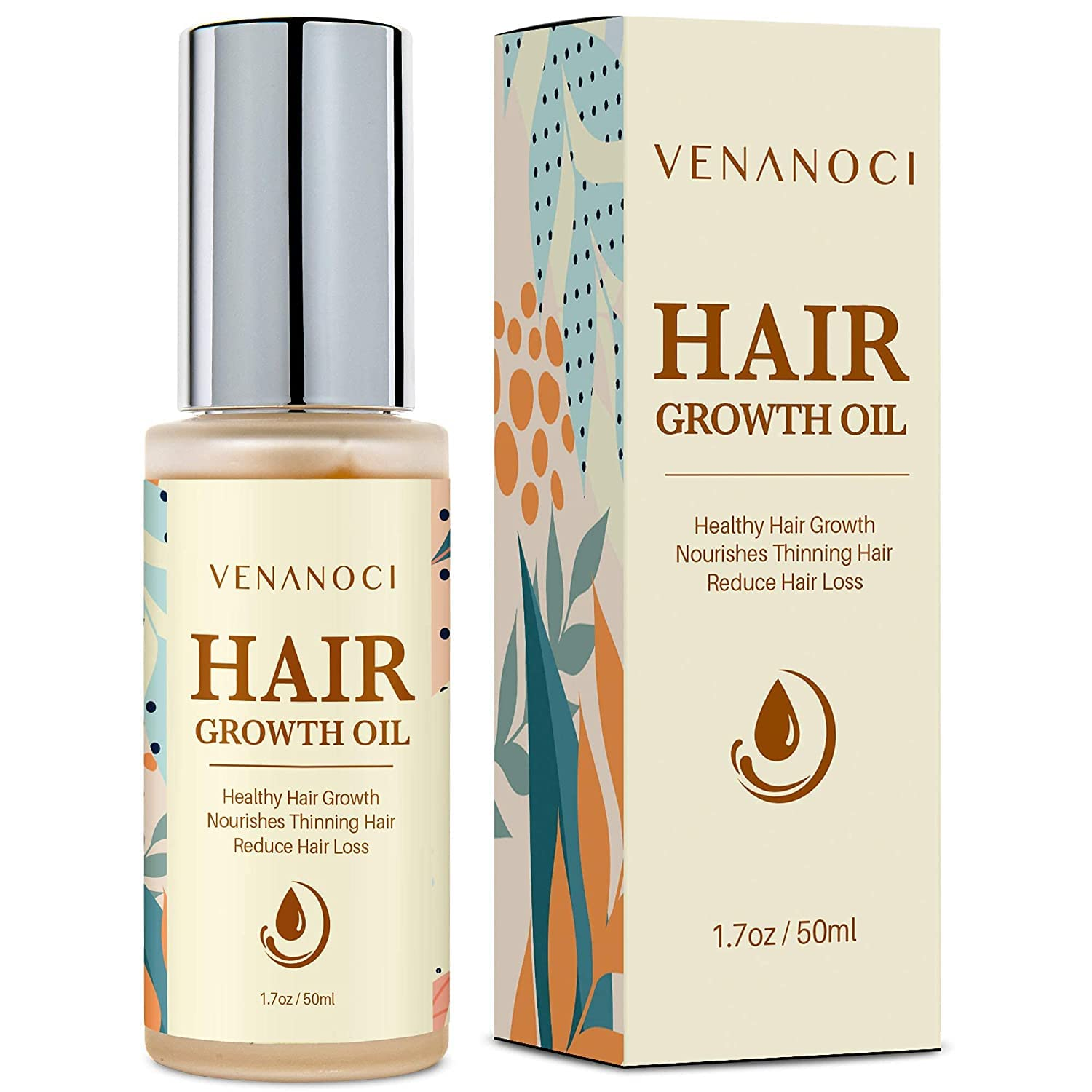
We recommend this if you want a lightweight, easy-to-use oil that nourishes the scalp and can improve hair strength over weeks of consistent use.
Pros
- Absorbs quickly without leaving greasy buildup.
- Noticeably softens hair ends and reduces dryness.
- Simple dropper application — a little goes a long way.
Cons
- Results take weeks; not an instant fix.
- Scent may be herbal for those who prefer unscented products.
- Small bottle size if you use it daily over long periods.
We used Venanoci for several weeks and liked how it sank into the scalp without feeling heavy. Massaging three to five drops into targeted areas made our scalp less dry and gave strands a smoother texture.
After regular use the hair looked less brittle and felt stronger at the mid-lengths and ends. We saw reduced breakage during combing, though noticeable regrowth required patience and continued application.
The dropper packaging kept waste low and the blend of rosemary, biotin, castor, and coconut oils left a subtle, fresh scent. If you want a non-greasy daily treatment that supports scalp health and strand strength, this is a practical, well-formulated option.
Vital Affair Rosemary Blend (6 fl oz)
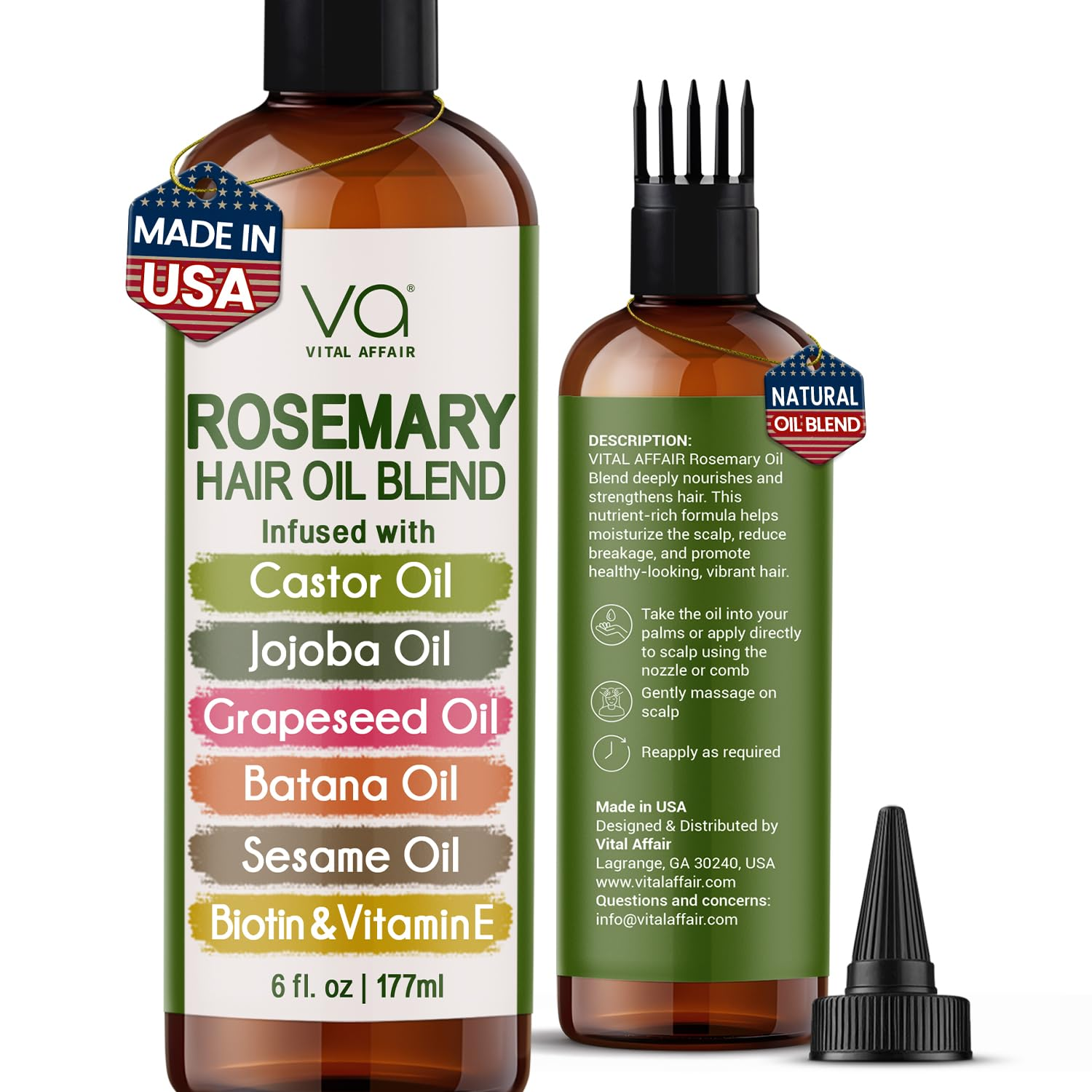
We recommend this if you want a lightweight, multi-use rosemary oil that strengthens hair and soothes the scalp without heavy residue.
Pros
- Absorbs quickly and leaves hair feeling softer.
- Noticeably calms itching and reduces flakes after a few uses.
- Lightweight scent and non-greasy feel suitable for daily use.
Cons
- Dropper cap can leak and be messy.
- Results on thicker regrowth take weeks to months.
- Some may prefer a stronger medicinal rosemary scent.
We used this on damp and dry scalps for a month and liked how it absorbed without leaving an oily film. The blend of castor, jojoba, and batana felt nourishing at the roots and smoothed strand texture after a few applications.
Scalp irritation and dandruff improved for us within a couple of weeks; the oil calmed itching and reduced visible flakes. The biotin and vitamin E combo seems to support stronger strands, though fuller regrowth needs more time and consistent use.
Application is simple and versatile — we massaged a few drops into the scalp and also used a small amount as a leave-in conditioner on mid-lengths. The packaging worked overall, but the dispensing cap was prone to leaking and required extra care when storing.
If you want a vegan, cruelty-free option made in the USA that balances scalp care with light conditioning, this is a practical pick for daily maintenance and gradual strengthening.
Buying Guide
We focus on ingredients first. Look for clinically supported actives such as minoxidil or proven botanical extracts; avoid products with unknown proprietary blends that do not list concentrations.
We check formulation and absorption. Oils with carrier oils like jojoba or grapeseed help deliver actives and condition the scalp. Lighter oils absorb faster and won’t leave a heavy residue.
We consider concentration and dosing. Higher concentrations can be more effective but may increase irritation risk. Read labels for recommended application frequency and follow directions for safety.
We assess scalp sensitivity and allergies. Patch-test any new oil and choose fragrance-free or hypoallergenic formulas if we have dermatitis or sensitive skin. Keep an eye out for known irritants like high alcohol levels.
We evaluate convenience and texture. Dropper bottles and pump applicators improve targeting and reduce waste. Non-greasy textures fit better with daily routines and styling products.
We weigh evidence and claims. Prefer products that cite clinical studies or clear mechanistic reasoning. Be skeptical of broad promises without supporting data.
We think about value and return policies. Compare ingredient lists and concentrations rather than price alone. Look for transparent labeling and brands that offer clear refund or satisfaction guarantees.
We monitor results and safety. Track progress with photos and notes over 3–6 months. Stop use and consult a clinician if we experience significant irritation, sudden shedding, or other concerning symptoms.
Frequently Asked Questions
We list which oils clinicians and studies favor, which oils most reliably increase hair thickness, best-selling options on Amazon, and the evidence for oils reducing hair loss. Read the brief answers to find products, mechanisms, and practical use tips.
What hair growth oils do doctors typically recommend for men?
Doctors often recommend oils with clinical support for scalp health and circulation, such as rosemary oil (usually 5% topical solutions) and peppermint oil (0.5–1% dilutions).
We also see clinicians suggest carrier oils like jojoba or coconut to improve scalp moisture and to dilute potent essential oils safely.
Which hair oils are most effective for improving hair density and thickness?
Research points to rosemary oil and peppermint oil as showing measurable gains in hair count and thickness in short-term trials.
Topical minoxidil remains the strongest non-prescription comparator; oils may complement but rarely match minoxidil’s documented effect size.
What are the top-rated hair regrowth oils for men available on Amazon?
Top-rated choices often include rosemary essential oil blends, peppermint oil serums, and castor oil products labeled for hair growth.
Look for products with clear concentration data, third-party testing or COA, and high customer reviews focused on repeat use and visible density improvement.
Can certain oils actually help with hair loss and promote regrowth?
Some oils can support conditions that contribute to hair loss—improving scalp circulation, reducing inflammation, or treating fungal conditions—leading to modest regrowth in specific cases.
We avoid claiming oils cure genetic hair loss; instead, they can be an adjunct to proven treatments and should be used with correct dilution and realistic expectations.