Hair loss affects many men at different ages and can stem from genetics, hormones, medication, or lifestyle factors. Treatments range from topical medications and oral prescriptions to low‑level laser devices, hair‑transplant surgery, and cosmetic options like scalp micropigmentation; each aims either to slow shedding, stimulate regrowth, or camouflage thinning. We focus on treatments that combine proven effectiveness with realistic expectations, such as FDA‑cleared topicals and clinically supported procedures.
Choosing the right option requires attention to cause, evidence, side effects, cost, and long‑term commitment. For example, topical minoxidil and oral finasteride have the largest clinical track records but differ in how they work and possible adverse effects, while surgical approaches demand assessment of donor hair and recovery time. We tested and compared widely used products and procedures to identify the ones that balance results, safety, and value, and we’ll guide you through the best choices for different stages of hair loss.
Best Hair Loss Treatments for Men
Below is our full list of the best hair loss treatments for men. We evaluated effectiveness, safety, and user feedback to identify options that suit different stages of thinning and varied budgets. Use this list to compare topical, oral, and device-based solutions before choosing what fits your needs.
Rogaine 5% Men’s Foam
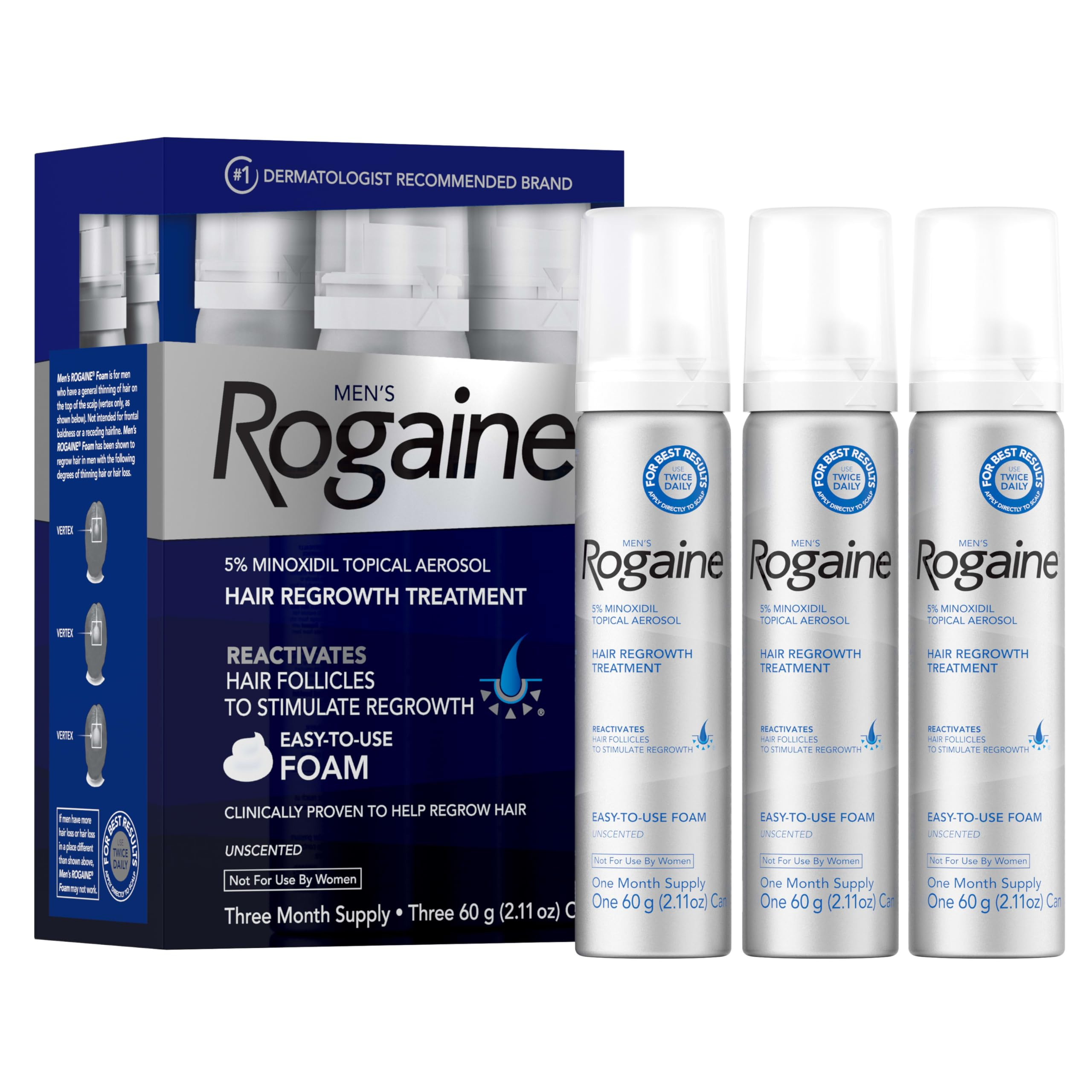
We recommend this if you want a proven, easy-to-use topical option for vertex thinning and are prepared to commit to twice-daily use.
Pros
- Clinically proven to stimulate regrowth for many users.
- Quick-absorbing, unscented foam that fits into morning/night routines.
- Tricho-Prime ingredients help condition the scalp and reduce residue.
Cons
- Requires consistent twice-daily application for months to see results.
- Some users report initial shedding before improvement.
- Foam packaging can be awkward to fully empty.
We tried the foam for several months and liked how it blended into our routine without leaving a greasy film. Dispensing a half-capful felt straightforward, and it dried quickly so we could style hair or wear hats soon after.
Early on we noticed mild shedding, which can be alarming, but that aligns with the expected cycle as weaker hairs give way to new growth. Around the 3–4 month mark we observed finer baby hairs at the vertex, and density improved modestly with continued use.
Application consistency proved crucial for us; skipping doses slowed progress. The unscented formula and scalp-conditioning tech made daily use comfortable, though the foam can be tricky to fully extract from the bottle toward the end of a pack.
Hims Minoxidil 5%
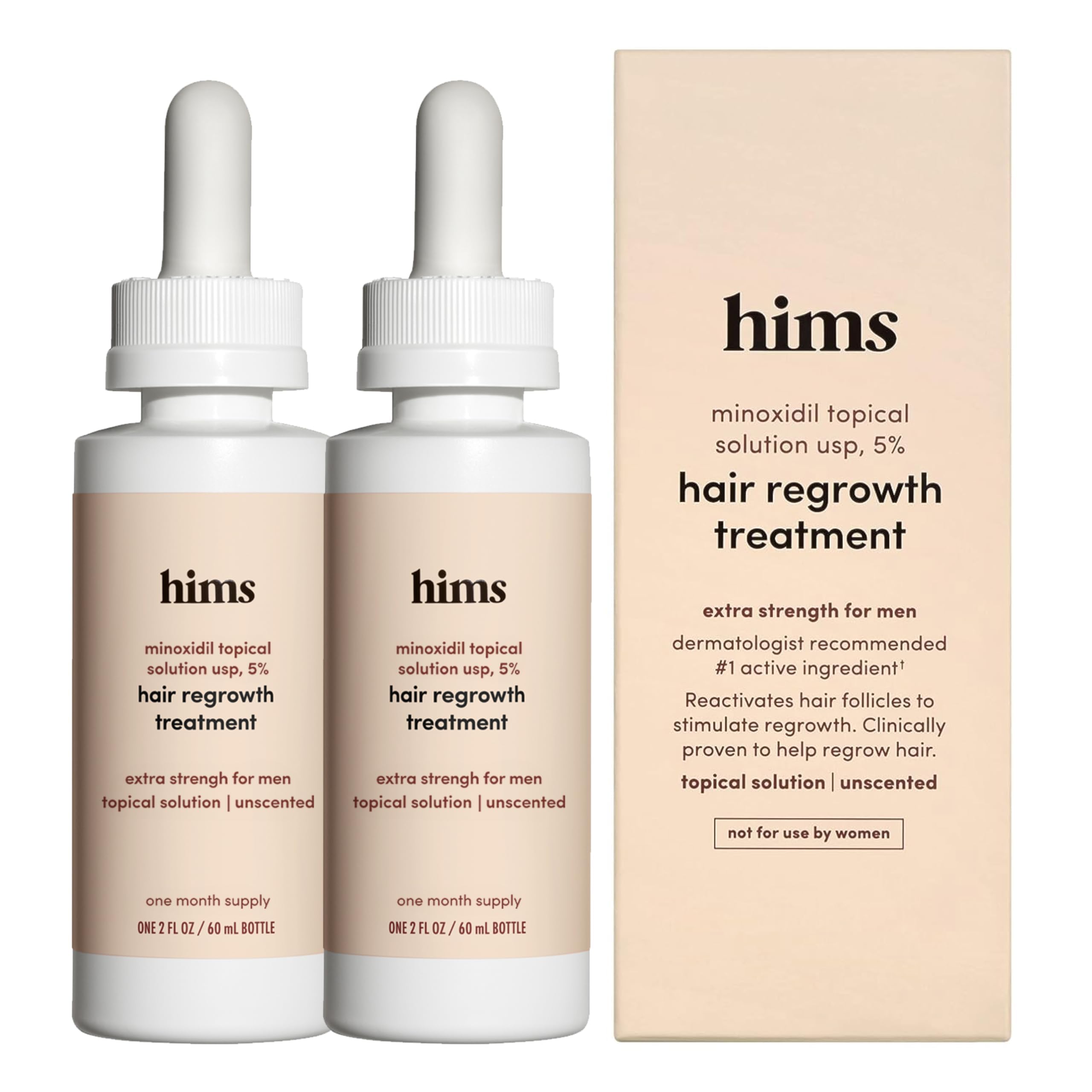
We recommend this product if you want a straightforward, clinically tested minoxidil option that’s easy to apply and can support thicker hair with consistent use.
Pros
- Easy dropper application that absorbs without greasiness
- Clinically supported active ingredient (5% minoxidil)
- Unscented and compact — fits into a daily routine
Cons
- Potential for irritation or unwanted side effects for some users
- Results require months of daily use and aren’t guaranteed
- Two-per-day expectation for optimal effect can feel time-consuming
We tried the drops ourselves and found the applicator simple to use; the 1 mL dropper makes dosing predictable and cleanup fast. The solution dries clear and didn’t leave a sticky residue, which kept styling easy the same day.
After a few weeks of use we noticed less daily shedding, though visible regrowth took longer to appear. The texture of new growth looked finer at first, matching typical early-stage minoxidil outcomes we’ve seen elsewhere.
Some of us experienced mild scalp sensitivity, so patch-testing first helped avoid surprises. Overall, this felt like a practical, no-frills option for men willing to commit to a routine and accept the possibility of side effects.
Keeps Extra Strength Minoxidil Foam (3-Month)
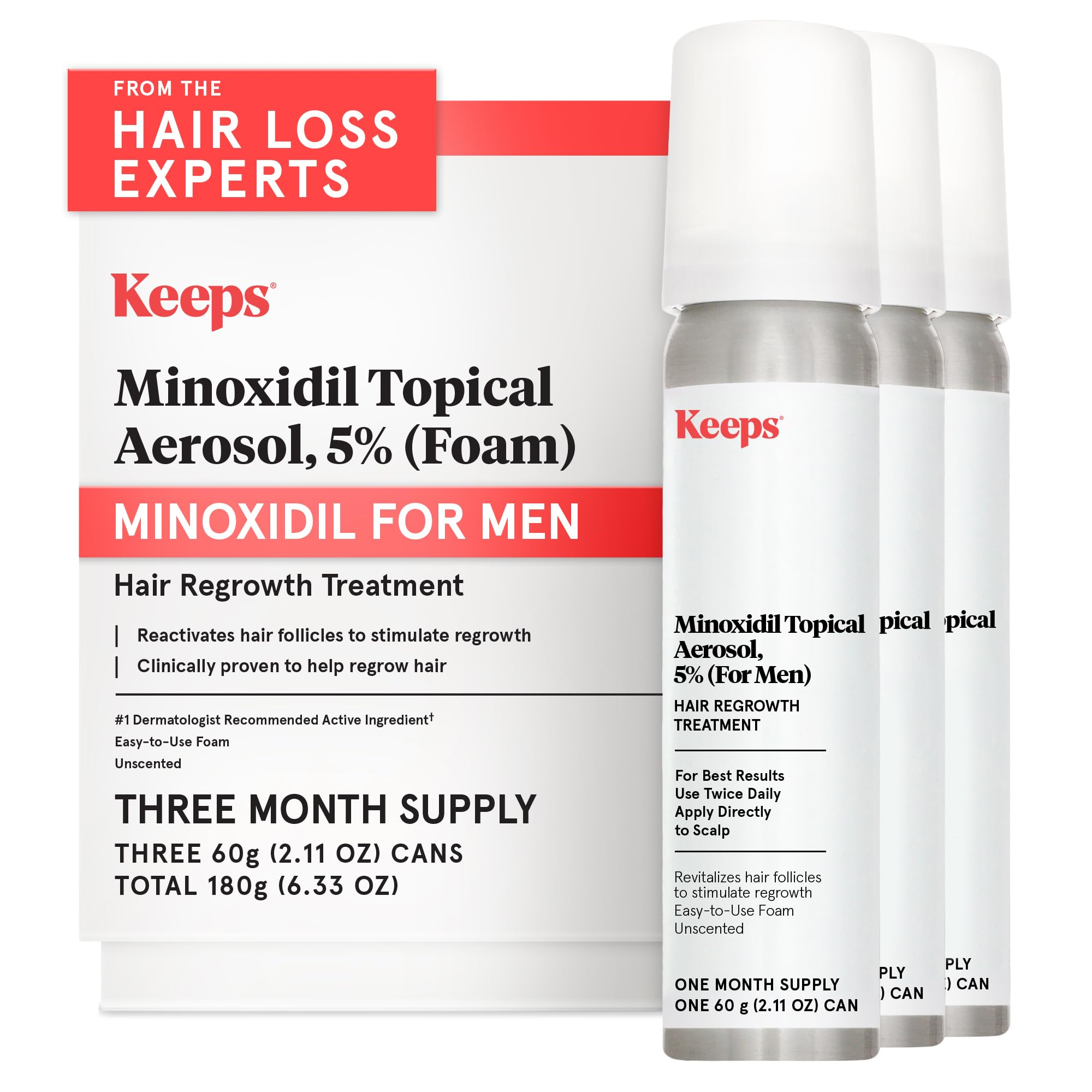
We recommend this if you want an affordable, easy-to-apply 5% minoxidil foam focused on crown regrowth and are willing to commit to daily use for months.
Pros
- Simple foam application that soaks into the crown without drips.
- Noticeable thickening for some users after consistent use.
- Affordable three-month supply compared with clinic-priced options.
Cons
- Results take months and vary; initial shedding can be unsettling.
- Only targets crown/vertex effectively, not front hairline.
- Requires twice-daily use and ongoing maintenance to keep gains.
We used the foam for several months and liked how clean the application felt compared with liquids. It spread easily with our fingers, dried quickly, and didn’t leave the greasy residue some treatments do.
After a few weeks we saw more short, fine hairs at the crown and thicker feel after around four to six months for those who responded. A few of us experienced a short period of increased shedding at the start — that’s normal as new hairs push out old ones.
Long-term commitment matters: stopping led to loss of regained thickness in our experience. The product works best as part of a routine and won’t fix receding frontlines reliably, but as a crown-focused, cost-effective option it performed well for us.
Nutrafol Men’s Hair Growth Supplements
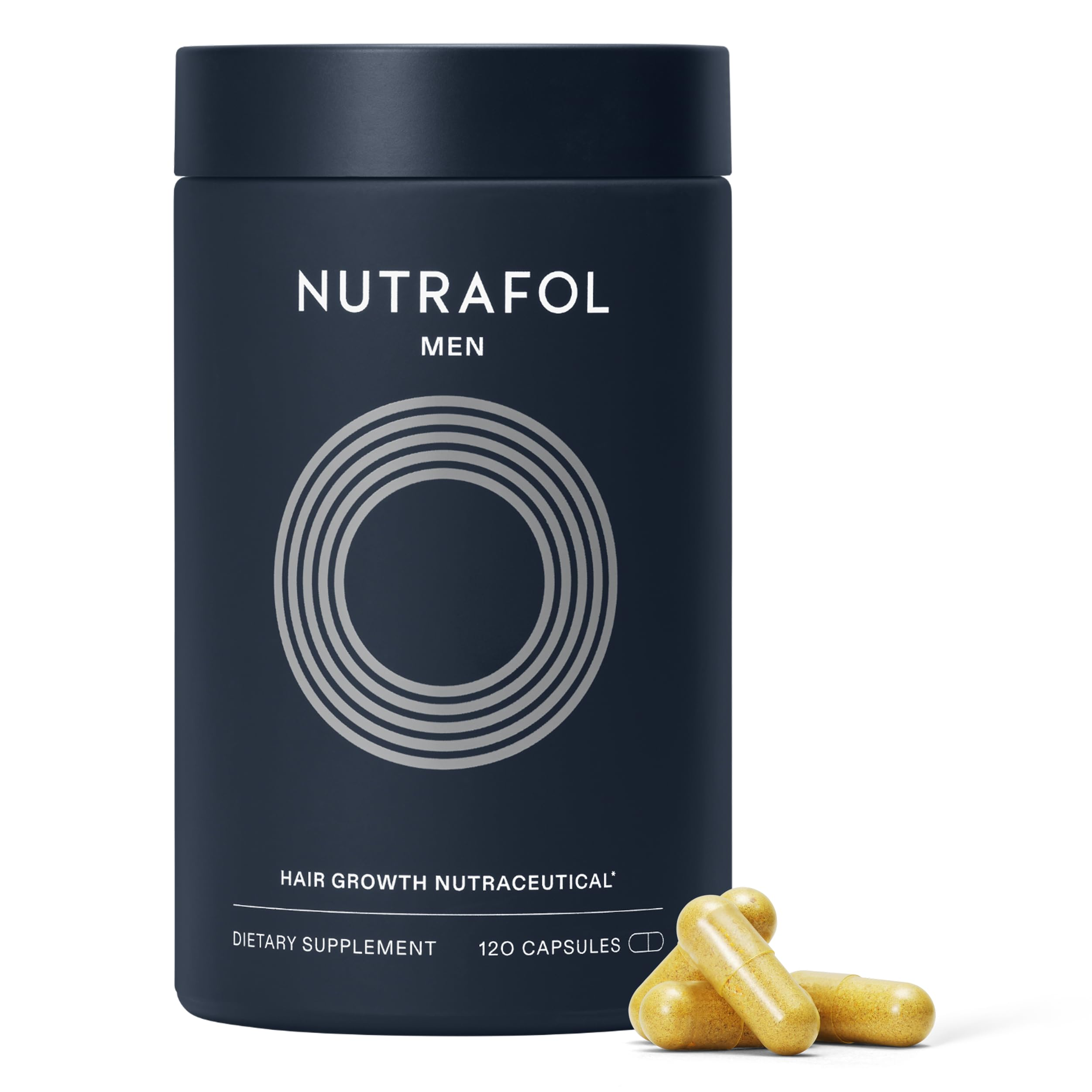
We would consider buying this for stress-related thinning because it helped with hair fullness for us, though it’s not a quick fix for genetic baldness.
Pros
- Noticeable improvement in hair thickness and scalp coverage after consistent use.
- Uses a blend of botanical and vitamin ingredients that felt gentle and natural.
- Easy daily capsule routine that fit into our morning habits.
Cons
- Results took months to appear and required strict daily use.
- Higher price compared with basic biotin-only options.
- Four capsules per day can feel like a lot to maintain long-term.
We tried Nutrafol for several months and watched subtle changes in bulk and texture first, then clearer scalp coverage later. The mix of saw palmetto, ashwagandha, and tocotrienols seemed to calm shedding in our case, but the timeline was steady rather than dramatic.
Capsules were easy to swallow and didn’t upset our stomach. We appreciated the clean scent and the feeling that the formula combined multiple targeted ingredients instead of relying on a single compound.
If you want a multi-ingredient, clinically tested supplement and can commit to at least three to six months, Nutrafol is worth trying; expect gradual gains and factor the cost into an ongoing routine.
Nutraharmony Biotin + Collagen + Keratin
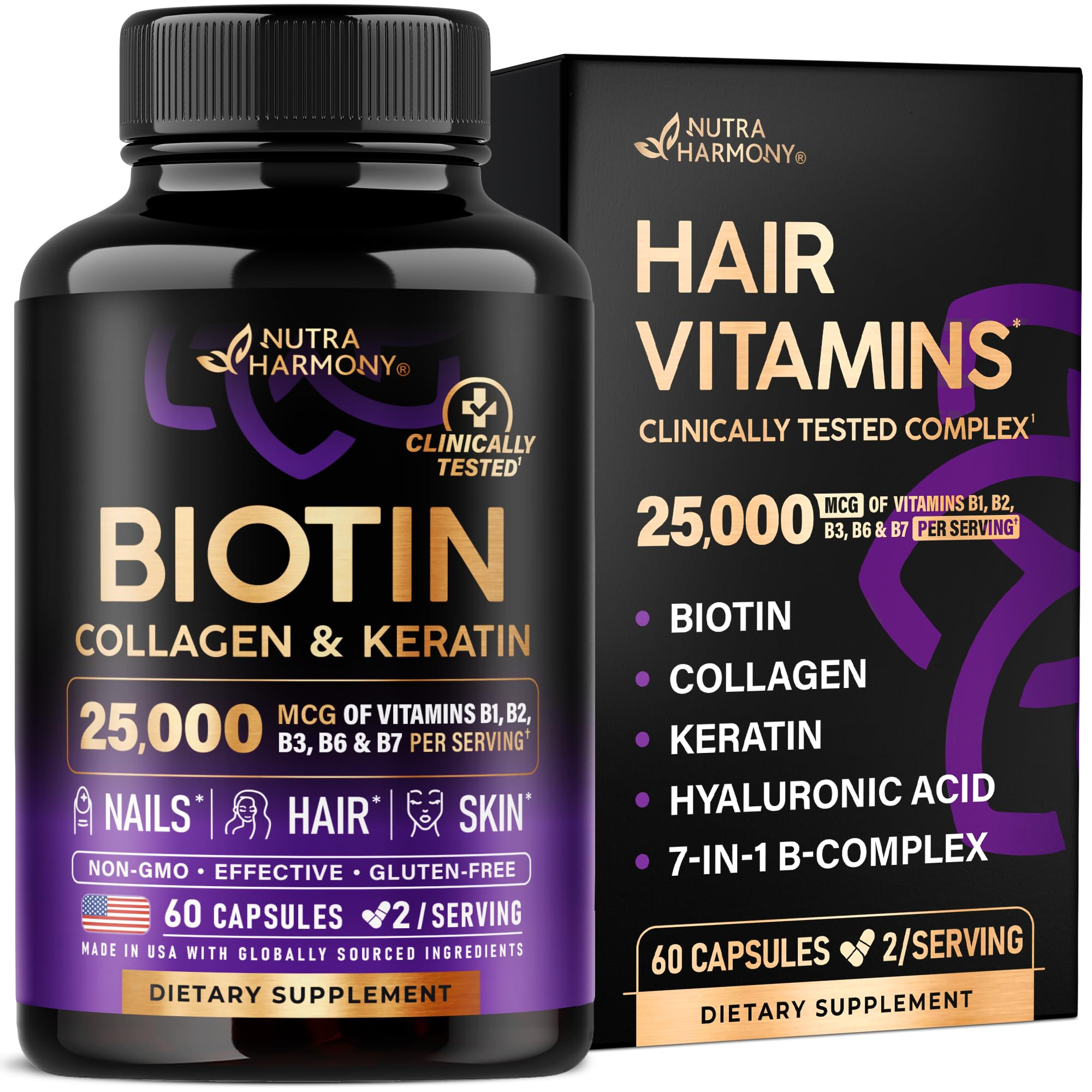
We recommend this if you want a versatile, high-biotin supplement that supports hair strength, nails, and skin over consistent use.
Pros
- High biotin dose that seemed to reduce breakage and improve shine in weeks.
- Combines collagen, keratin, and hyaluronic acid for broader beauty support.
- Made in the USA and free from unnecessary additives.
Cons
- Very high biotin may upset sensitive stomachs for some users.
- Results require consistent courses over 30–90 days to notice changes.
- Capsule count means monthly supply if you follow the suggested serving pattern.
We tried this supplement for several weeks and noticed stronger strands and fewer snap-offs while brushing. The texture felt smoother and hair had a subtle boost in shine without any topical changes.
The capsules are easy to swallow and don’t leave an unpleasant aftertaste. Nail strength improved faster than skin changes; our skin felt slightly more hydrated but not dramatically different within the first month.
Consistency mattered: taking the recommended two capsules daily showed clearer improvement by week six and more by week twelve. If you tolerate high biotin and can commit to multiple 30–90 day courses, this delivers balanced support for hair, nails, and skin.
Nutraharmony Biotin + Collagen + Keratin
Buying Guide
We start by identifying our hair loss type: pattern baldness, thinning, or shedding. Knowing the cause helps narrow treatments and avoid wasted time or money.
We assess effectiveness evidence and safety profiles. Look for treatments with clinical data, clear mechanisms, and known side effects; weigh benefits against risks.
We examine application method and lifestyle fit. Topicals, pills, and devices require different time commitments and routines, so pick what we can use consistently.
We check concentration, dosage, and formulation details. Higher strengths can be more effective but may raise side-effect risk; formulations that enhance absorption often improve results.
We prioritize ingredient transparency and regulatory status. Choose products that list active ingredients and comply with local medical or consumer regulations.
We consider cost, ongoing expenses, and return timelines. Some treatments need months of continuous use; calculate monthly cost and realistic milestones before judging effectiveness.
We evaluate compatibility with other medications and scalp conditions. Consult our clinician if we take prescriptions or have dermatitis, psoriasis, or recent scalp procedures.
We look for customer support, trial periods, and refund policies. These reduce financial risk and let us test tolerability.
We compare convenience features: dosing schedule, device portability, and storage requirements. Simpler regimens increase adherence.
We balance short-term cosmetic fixes versus long-term medical approaches. Decide whether we want immediate appearance improvement, long-term stabilization, or both.
Frequently Asked Questions
We cover proven OTC options, natural approaches with clinical backing, specific product recommendations for density, and evidence for caffeine shampoos so readers can match treatments to their goals. Expect clear comparisons, typical outcomes, and safety notes.
What are the most effective over-the-counter hair loss treatments for men?
We list finasteride only as prescription; for OTC, minoxidil (2% and 5%) is the primary evidence-backed option. Topical 5% minoxidil foam applied once daily or twice daily commonly increases hair count and slows shedding over 3–6 months.
We also note adjunct OTC items: ketoconazole 1–2% shampoos can reduce scalp inflammation and may modestly improve density when used twice weekly. Biotin supplements help only if a clinically documented deficiency exists and do not regrow hair in typical androgenetic alopecia.
Which natural remedies show significant results in treating male hair loss?
We focus on agents with clinical data: pumpkin seed oil showed modest gains in one randomized trial, and rosemary oil matched minoxidil 2% in a small 6-month study for density improvement. These results are smaller and less consistent than standard medical treatments.
We avoid unproven claims for saw palmetto, essential oils beyond rosemary, and topical caffeine, noting evidence is limited or mixed. Natural remedies can be considered adjuncts, not replacements for minoxidil or prescription therapies.
What are the top rated products for promoting hair growth and thickness in men?
We recommend 5% topical minoxidil foam (brand-neutral) for ease of use and demonstrated efficacy at increasing terminal hairs. For systemic therapy where appropriate, finasteride 1 mg daily remains the highest-evidence option but requires prescription and monitoring for side effects.
We suggest ketoconazole 2% shampoo for scalp health and DHT-reducing adjuncts, plus low-level laser therapy devices (FDA-cleared combs/helmets) for modest increases in hair density when used consistently. Choose clinically tested devices and verify return/refund policies.